
|
Visit Spike, george, and other birds of prey!THESE TWO EASTERN SCREECH OWLS HAVE RISEn TO ONLINE FAME, BELOVED BY MILLIONS OF PEOPLE THROUGHOUT THE WORLD. tHEIR STORY HAS HELPED EDUCATE COUNTLESS PEOPLE ABOUT RAPTOR CONSERVATION.LEARN MORE ABOUT SPIKE & gEORGE below and how you can meet them and our other raptor ambassadors.
|

|
Book a Talon Talk
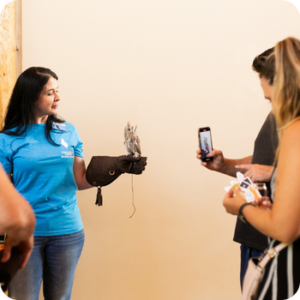
Are you interested in meeting an educational raptor like Spike or George? We’re now offering onsite and virtual Talon Talks!
Talon Talks are approximately 20 minutes and feature one live raptor. The handler will introduce the bird, answer questions, and then allow time for photographs. Guests may request a hawk, falcon, vulture, or owl, but final bird selection is not guaranteed.
April through August: Talon Talks are available on Sundays. September through March: Talon Talks are available seven days a week.
Onsite Talon Talks: $100 + daily admission per person (max capacity 10 people)
Virtual Talon Talks: $60 flat fee
Advanced notice of at least two weeks is required. Read about the raptors you can meet below. To find out more information about booking a Talon Talk, please fill out the form below or call 402-731-3140.
ABOUT SPIKE & gEORGE
Spike
Spike is an Eastern Screech Owl estimated to be about 5 years old. He sustained brain damage after being trapped in a boxcar on a train. Likely the high temperatures along with lack of nourishment and hydration contributed to this. Spike now lacks his “wild awareness,” and would not be able to catch his own food or evade a predator. |
George
George is also an Eastern Screech Owl, and Spike’s roommate. He’s been with us for 13 years after his nest tree was mistakenly cut down. George unfortunately was poked in the eye from the tree, affecting his pupil and his ability to catch prey on his own. |


Frequently Asked Questions
Can I see Spike & George during my visit to Fontenelle Forest?
Spike and George are not on display in the Raptor Woodland Refuge. Because they do so many on- and off-site education programs, we give them their privacy. There are 18 non-releasable raptors residing on display that visitors can meet!
How can I support the care of Spike and the other raptors who live at Fontenelle Forest?
Becoming a Fontenelle Forest member is a great way to support the raptors. Monetary donations to the raptor program go directly to supporting the high quality of life our birds enjoy. This covers food and vet visits, as well as staffing our refuge with qualified individuals.
Why can't Spike live in the wild?
Spike sustained brain damage after being trapped in a boxcar on a train. Likely the high temperatures along with lack of nourishment and hydration contributed to this. Spike now lacks his “wild awareness,” and would not be able to catch his own food or evade a predator.
How old is Spike?
We estimate Spike is likely 3 to 4 years old. His plumage told rescuers he was at least one year old. He likely wasn’t much older than that, as eastern screech-owls tend not to live much more than a few years in the wild.
What does Spike eat?
Spike eats one large mouse every night that weighs roughly 20 grams. We order our rodents frozen from USDA and FDA approved facilities and thaw them out before feeding them to the raptors.
Is Spike nocturnal?
Eastern screech-owls, like many owls, are typically nocturnal. Raptors in captivity often adjust to a more diurnal schedule, but our owls are still quite active in the nighttime.
If I find an injured bird/raptor, can I keep it as a pet?
The Migratory Bird Treaty Act (1918) protects migratory birds (raptors included). This means no person without government permission can house or own a protected bird, their feathers, eggs, nests, or carcasses. The wild is the best place for wild animals, and to give an injured animal the best chance of returning to the wild, all injured wild animals should be given to a certified wildlife rehabilitator.
Do screech owls require a companion/roommate?
Raptors do not require companionship from another raptor in captivity, but it cannot be generalized that all raptors do NOT want companionship. It often comes down to the individual bird’s temperament. Fontenelle Forest Raptor Staff evaluate and introduce roommates in controlled environments long before the birds are ever left alone together.
Raptor Stories
All of the raptors in our care are not able to live on their own for a specific reason. Sadly, many of their stories involve interactions with humans that ultimately rendered them non-releasable. Just a few examples are getting struck by a car, being illegally shot, or becoming sickened as a result of ingesting particles from a lead bullet.
|
|
|
|
|
|
|
|
|
|
|
|
|
|
|
|
|
|
|
|
|
|
|
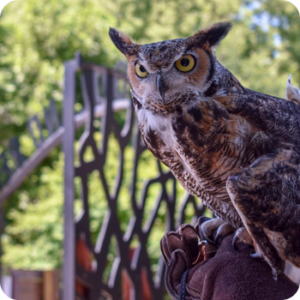
CinnamonGreat-Horned Owl Cinnamon will hiss and clack her beak if a caretaker gets too close but doesn’t flee like her mew-mate Minerva. She gives little to no acknowledgement to Minerva, which works best for their relationship. |
MinervaGreat-Horned Owl Minerva likes her space and will occasionally cling to the ceiling of her enclosure. She gets along well with her mew-mate Cinnamon by ignoring her altogether. |
OrionGreat-horned Owl |
TaigaMerlin |
SavannaSwainson’s Hawk |
DakiniSwainson’s Hawk |
EchoBroad-winged Hawk |



Support the Raptor Program
There are multiple ways you can support the Raptor Program and the important work being done in statewide raptor education and conservation.
Donate
|

Purchase a Spike & George t-shirtPurchasing a Spike & George shirt is a fun way to show support for our Raptor Program. It’s the perfect gift for every bird lover!PURCHASE your SHIRT |
Volunteer
|